

Step 1
Patient logs the diary
Your patient captures 3 days of voids, drinks, and leakage on myflowcheck.com (free, no signup), then shares a PDF with you. Or transcribe a paper diary directly in the entry form. → Easily share via QR or email
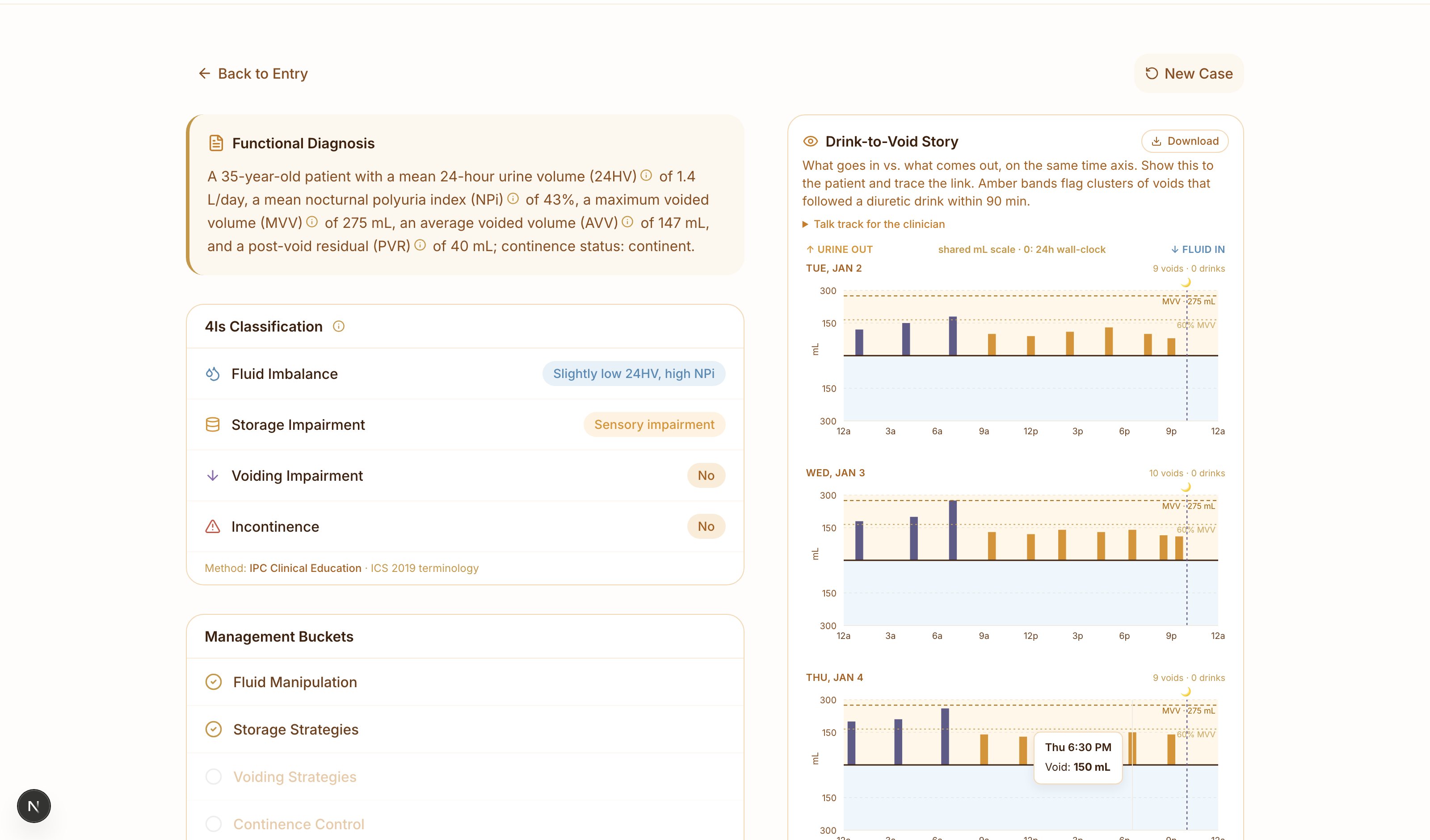
Enter your patient's 3-day bladder diary, or import the PDF from myflowcheck.com. In under 2 minutes you get an IPC Functional Diagnosis: the standard ICS metrics, the 4Is classification, and a printable summary for the chart. At follow-up, add the next diary and the response to treatment is charted for you.
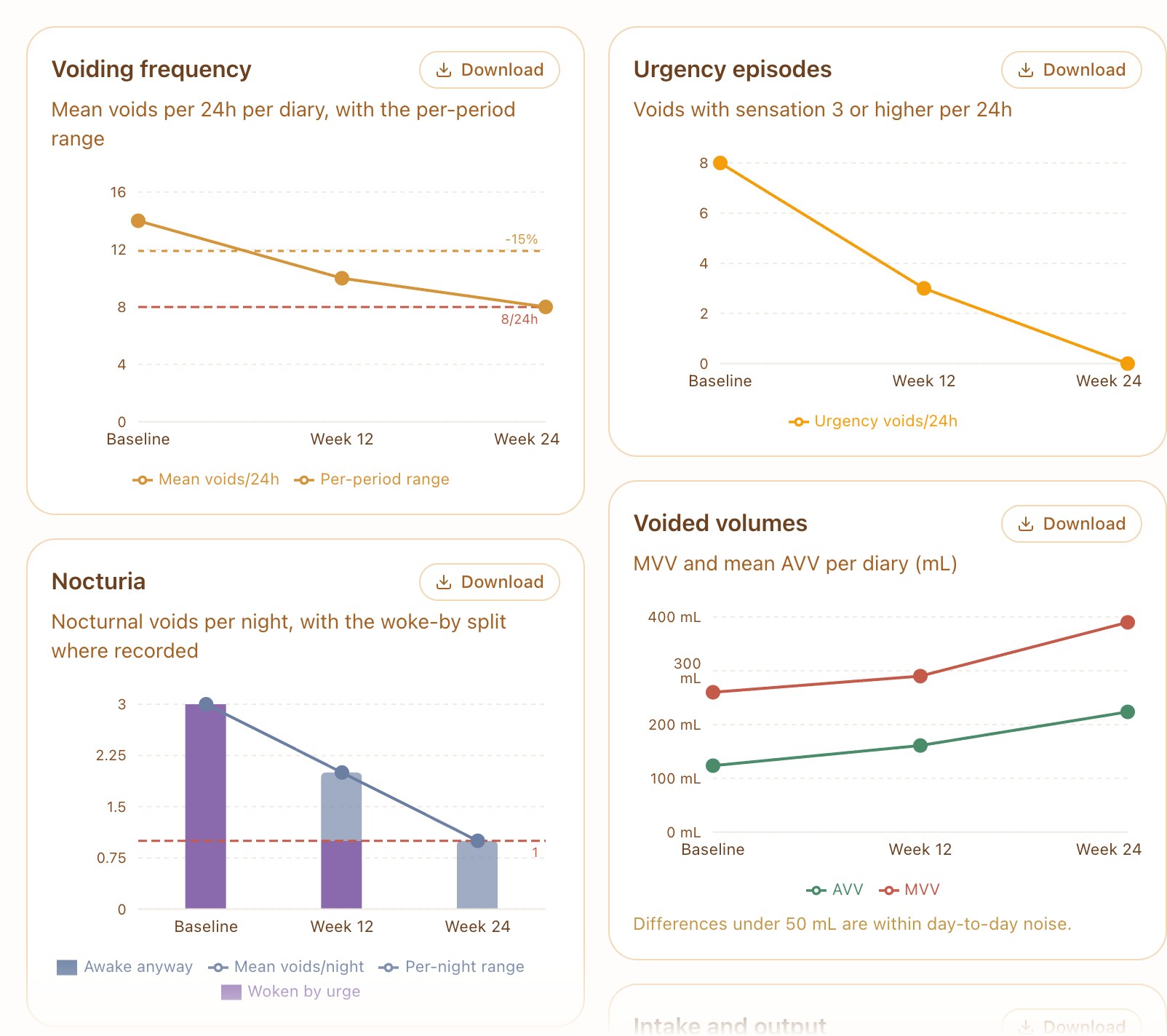
Progress tracking
Add the follow-up diary next to the baseline: no re-entry and no spreadsheets. Frequency, nocturia, leaks, volumes and NPi are charted against trial responder thresholds, with clear cautions when a comparison is not reliable.
Step 1
Your patient captures 3 days of voids, drinks, and leakage on myflowcheck.com (free, no signup), then shares a PDF with you. Or transcribe a paper diary directly in the entry form. → Easily share via QR or email
Step 2
Paste or import the PDF here. You'll get an IPC Functional Diagnosis with all the clinical numbers in under 2 minutes.
Step 3
Copy the result into Epic, Cerner, or Prompt, or print a patient handout. The FHIR and C-CDA exports handle the EMR plumbing for IT. Walkthrough inside.
Workflow
No transcription and no arithmetic: from a 3-day diary to an ICS-aligned functional diagnosis in under two minutes, and each follow-up diary charts the response to treatment.
Privacy
No accounts and no uploads. The diary never leaves the device, so there is nothing to clear with IT.
Method
Built on Integrated Pelvic Care guidelines from clinicians who use it daily.